
A lot of what people think they “know” about Native Americans comes from old movies or stuff they read without checking. But the truth is usually way more ordinary, or way more complicated, than the stereotype. Here are fourteen stereotypes about Native Americans that aren’t true. Which of these did you use to believe?
Featured Image Credit: Shutterstock.
Most Native Americans live on reservations

The idea that Native people mostly live on remote reservations just isn’t accurate anymore. The truth is, more than 7 out of 10 live in big cities & metropolitan areas today, like Phoenix and Los Angeles. As such, you’ll find Urban Indian Health clinics serving folks who are nowhere near a reservation.
Native people don’t pay federal income taxes

Some people seem to believe that Native Americans don’t pay taxes. They do. They file federal income taxes just like everyone else, although there are some exceptions tied to trust land or reservation income. But those are specific situations & nobody is avoiding taxes simply because they’re Native.
They all get casino checks

The casino myth makes it sound like every tribal citizen gets a fat monthly check from casinos. But the reality? Only some tribes even have casinos & not all of them are profitable. A lot of tribes don’t run casinos at all, and when payouts do happen, the IRS considers them taxable income. It’s not exactly “free money.”
All Native people are one tribe

People sometimes picture one big tribe when they think about Native Americans, but that misses the point completely. There are hundreds of federally recognized tribal nations. Each one has its own rules & governments, as well as its own citizenship standards..
The Indian Health Service is free & universal

The Indian Health Service isn’t a magic health card that covers everything. Instead, it’s a federal program that serves certain tribal citizens, although funding is stretched & access depends on where you live. Anyone who’s too far from an IHS facility might not get much from it. And no, being Native doesn’t mean you get free healthcare.
Land is communal

Another false stereotype is that all Native land is “shared.” Actually, land ownership in Native territory is complicated because the government holds some of it in trust for tribes. Some individuals own part of it. As for the rest? It’s fee simple land just like anyone else’s property. The way the land is managed varies a lot, depending on the tribe & the history.
Headdresses and regalia are costumes

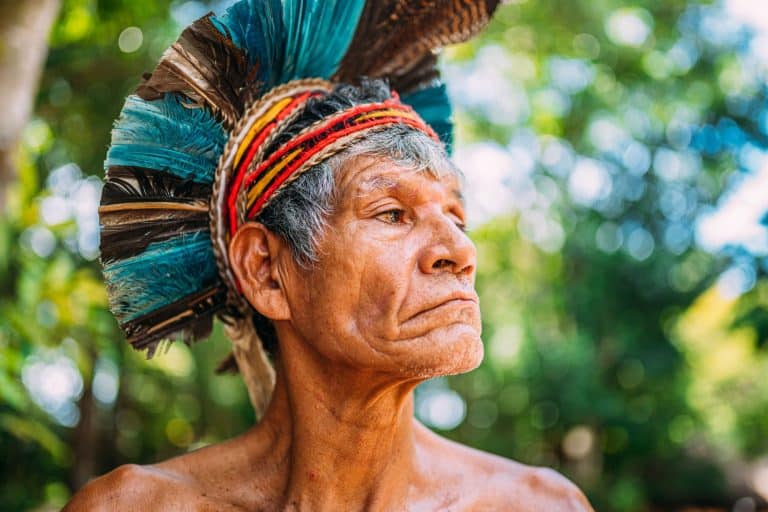
Feathered warbonnets belong to specific Plains nations, which they earned through acts of honor. They’re not something every Native person wore & their traditional outfits certainly aren’t just costumes. They’re called regalia. A powwow dancer’s clothing has important cultural meaning that’s connected to their community.
They’re genetically meant to be alcoholics

The so-called “firewater myth” says Native people are more likely to be alcoholics because of their genes. Not true. In fact, studies show there is no genetic difference that makes Native folks more vulnerable than anyone else, and what is true is that the stereotype is harmful. Some people have even used it as an excuse for discrimination.
Tribal sovereignty goes above the law

Tribes are sovereign. However, that doesn’t mean anything goes, as federal law & court cases spell out what tribal governments can and can’t do. This includes a 1978 Supreme Court case (Oliphant) that ruled that tribes couldn’t prosecute non-Natives. Congress has restored some of that power in specific cases under the Violence Against Women Act.
Native Americans all get free college

Many people think Native students automatically get a “free ride” through college. That’s just not how it works. Of course, some tribes set aside money to help their members, yet this depends on the tribe & how much funding they have. A lot of Native students still fill out FAFSA & take on loans. Free college across the board? Yeah, that doesn’t exist.
Everyone has high cheekbones

Hollywood stuck the image in people’s heads that all Native Americans have straight black hair & brown skin, as well as cheekbones. Yet not all Native people look like that. After all, there are hundreds of tribes and so much variation, so there’s no single “Native look.” Some are light-skinned & some are darker. Some have freckles & blond hair, or even blue eyes.
Native Americans don’t use technology

There’s an odd stereotype that Native communities are somehow cut off from modern technology. That’s not true. In reality, they’re online, doing stuff just like everyone else, and some tribes even use this technology to support language revitalization & connect remote communities. Native people don’t exactly avoid or reject technology.
All Native Americans get monthly government checks

One of the most stubborn myths is the idea that every Native person gets money in the mail each month from the federal government…simply because they’re Native. No treaties grant this. Sure, the federal government funds certain programs, but those funds don’t show up as personal paychecks to individual tribal citizens.
Native Americans all live in poverty

Native life is more than simply poverty & hardship. Of course, poverty does exist in some communities, yet many tribes own businesses & run schools. They have citizens working in every profession you can think of. Some communities are economically strong, which means that the stereotype that they’re all in poverty is simply wrong.
Sources: Please see here for a complete listing of all sources that were consulted in the preparation of this article.
Like our content? Be sure to follow us.

