

Gen Xers grew up dealing with things that, if they happened today, would lead to someone demanding to know why nobody stepped in.
The room nobody could leave

It’s still a normal punishment today to be sent to your room. But what made things different for Gen X was that they were sometimes locked in their rooms, or in another part of the house. Their parents would physically isolate them for long stretches of time.
It’s a form of child abuse and neglect. Yet in those days, people saw it as a punishment that was supposed to make young people follow the rules.
The prison visit

Scared Straight was a program that gained national attention during the 1970s. It involved sending troubled teenagers to prisons, where inmates could shout at them and threaten them. They’d describe in explicit detail what their life was like behind bars.
The goal was to frighten the students so badly that they’d never want to be in there themselves. Later researchers, however, argued that these kinds of programs actually increased offending. They claimed that these programs only traumatized kids, rather than teaching them a lesson.
The door that stayed locked

It’s certainly no secret that Gen Xers played outside a lot more than modern kids do. The thing is, they were sometimes left outside with the door locked behind them, as their parents wouldn’t allow their kids back inside until dinner. If they came inside, they would need to stay indoors or do chores, so many just chose to stay out.
They had to figure out how to entertain themselves outside for hours. Even when they needed the bathroom, Gen X’s parents would leave them outside. The idea of locking a child outside unsupervised for so long would never fly today. Yes, modern parents would say it was traumatic.
The empty house

Whenever Gen X’s parents went to work, they were expected to look after themselves at home. They were the latchkey generation, after all, and kids as young as eight would sometimes be home alone. They were supposed to feed themselves.
It’s not something that kids today would do because, well, they wouldn’t be allowed to. Modern parents shudder at the thought of leaving an eight-year-old to fend for themselves. It’s just too dangerous.
The lesson nobody forgot

The classroom was a totally different place when Gen X was growing up, although not necessarily in a good way. Teachers would sometimes humiliate students in front of the class because doing so was seen as a form of discipline.
Yes, publicly embarrassing students for their mistakes was supposed to correct their behavior. Doing that today is more likely to lead to complaints from parents. It hasn’t disappeared entirely, of course, but our attitudes toward this kind of behavior have changed.
The journey back

Just because a Gen Xer’s parent dropped their kid off at a friend’s house didn’t mean they’d return to collect them. It was actually pretty normal for Gen X children to figure out their own way home. Perhaps that involved walking several miles, or perhaps they’d rely on public transportation.
It’s not like they had cellphones to check the directions. Forcing a child to find their own way unsupervised would be considered a form of neglect today.
The paddle in the principal’s office

Getting sent to the principal’s office meant something rather different in the 1980s compared to today. That’s mostly because physical punishment was far more common, and even allowed, back then. Teachers were allowed to use a wooden paddle to discipline students.
You didn’t even have to do something extremely terrible, either. No, relatively ordinary classroom misbehavior could lead to you getting a paddling. There are some states that still allow corporal punishment. But overall, the idea of being physically punished by the principal would be more traumatic than a normal kind of punishment for most students.
The trip into the wilderness

That’s not all for punishments. Parents have always had difficulties with their teenagers, and during the 1980s, there was one pretty harsh solution to that. You’d send your kid to a wilderness program to straighten them out.
These weren’t your average summer camps. No, they were designed to physically exhaust teenagers and force them to follow strict rules. They were completely isolated from their families. Parents today would treat these camps as places of abuse, rather than correction.
The deep end

There was no such thing as a simple swimming lesson back in the day. Many times, when an adult wanted a child to swim, they’d throw them into the water and let the child’s instincts take over. That was, apparently, the best way for kids to get over their nerves.
We know today that throwing a child into deep water isn’t going to make them a good swimmer. In fact, it’s probably the opposite, as it could make them fear water even more. Most swimming teachers go for a more gradual and less traumatic approach.
The locker room rule
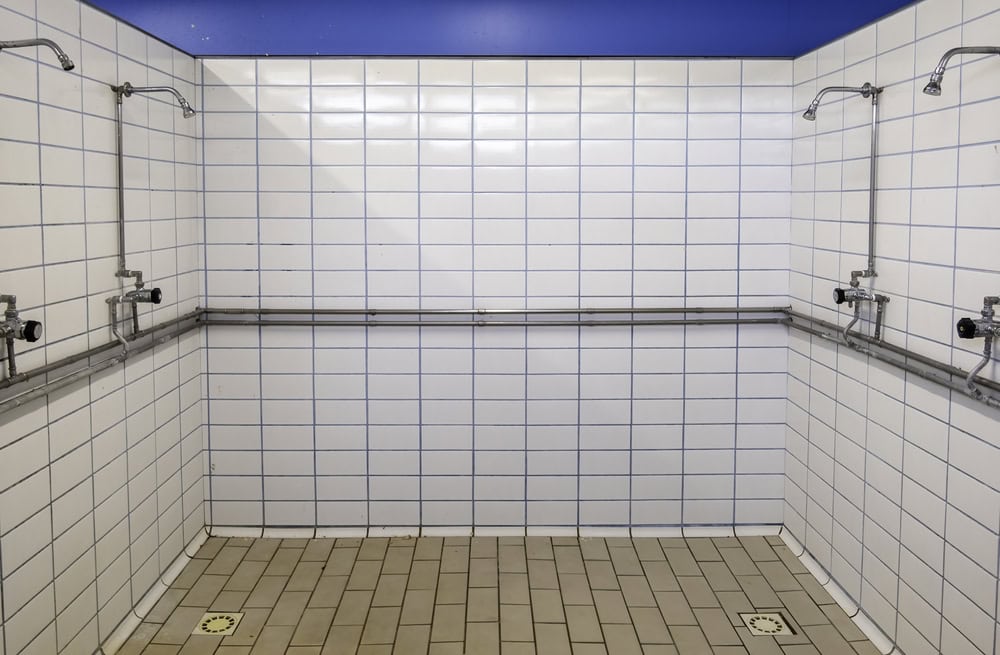
The end of gym class meant one thing and one thing only. It was time to shower. When Gen X was growing up, they were expected to shower together with their classmates, without any sense of privacy. It didn’t matter that they might’ve felt uncomfortable.
They had no choice whatsoever. It wasn’t until the‘90s that school policies around this started changing, and adults began to understand that these showers were very awkward for teenagers. Most schools wouldn’t dream of forcing students to shower with their peers.
The haircut nobody agreed to

Another harsh form of punishment involved hair. Namely, a lack of it. Gen X grew up in a time when it was acceptable to trim or completely shave a misbehaving child’s hair, often as a form of punishment.
It was sometimes done because their hair broke school rules, and the student themselves never got the chance to choose their new hairstyle either. But a teacher could never do that today. If they tried taking scissors to a student’s hair, it’d lead to a very different conversation with their parents.
The taste of punishment
Kids in the 1970s or 1980s would desperately hope that their parents didn’t hear them swear, or else they might end up with soap in their mouth. Yes, real soap. Some parents would physically wash their child’s mouth out with a bar of soap to punish them for swearing.
They genuinely thought that the awful taste would prevent their kids from wanting to swear again. But these days, we know how extreme and ineffective this kind of punishment really is. It’s a form of abuse, simple as that.
The driver’s education screening

Red Asphalt was a movie that many Gen Xers had to watch at school, although it wasn’t your standard blockbuster. It was a documentary film made by the California Highway Patrol, and it featured actual footage of terrible car crashes. There was footage of horrific and real injuries.
The goal was to warn students about dangerous driving, and people believed that showing real wreckage and victims was the way to do that. It was only in the ‘90s that things changed. That was when the Highway Patrol introduced a far less graphic version, but it didn’t erase the trauma of the things Gen X had to watch.
Sources: Please see here for a complete listing of all sources that were consulted in the preparation of this article.
12 things Gen X pretends they don’t miss (but totally do)

Gen X remembers a lot of things that were inconvenient and ugly, but they were still somehow more fun than they’re ready to admit right now.

