

Take a look around your home. What do you see? A three-dimensional roadmap of legal limits. We like to think that if we get sued, it will be for something big. We don’t think of lawsuits when we look at the shampoo bottle in our shower or the snack box in our pantry.
Engineers design products anticipating how people will use them safely. The law only considers how people actually use them. If the cup is designed to be held, but the lid comes off with the slightest pressure, that’s a bad design that doesn’t account for human behavior.
Design flaw lawsuits aren’t just about burns, they’re a UX (User Experience) case study. They teach companies that humans are clumsy, rushed, and prone to making assumptions.
Here are 13 lawsuits that resulted from everyday items you use.
McDonald’s hot coffee

Contrary to popular belief, this case was not about coffee being hot. The issue was that McDonald’s was serving defective coffee.
According to McDonald’s own operating standards, coffee was required to be served between 180°F–190°F (82°C–88°C). For reference: water boils at 212°F. At 190 degrees Fahrenheit, water causes full thickness, third degree burns to human skin in between 3-7 seconds.
Plaintiff Stella Liebeck was a 79-year-old woman who was a passenger in a parked car. When she inadvertently spilled the coffee, it became trapped against her skin by her sweatpants.
In other words, McDonald’s coffee boiled Stella Liebeck. She suffered third-degree burns on both of her inner thighs, as well as her groin. Stella Liebeck spent 8 days in the hospital and required extensive skin grafting. She underwent two years of follow-up medical treatment.
McDonald’s smoking gun presented during the trial were their internal company records that showed they knew of over 700 prior burn incidents over the past ten years.
McDonald’s had already paid over $500,000 to settle injury claims related to the serving temperature of their coffee, but the company found that lawsuits were cheaper than changing their brew temperature.
Monday haircare shampoo

Monday bottles are known for their chunky, matte pink silhouette. And this huge bottle is a trademark part of Monday’s branding.
But according to the recent class-action lawsuit filed against them, that stylish “premium” packaging might actually be unlawful slack-fill. Slack-fill is a legal term referring to any non-practical empty space inside a consumer product’s container.
Basically, the lawsuit claims that the company intentionally uses oversized opaque bottles that conceal the actual level of product from the consumer. The bottles are labeled with “12 fl oz (354 ml)” of contents, but the bottle itself could physically hold more if it were filled all the way to the top.
The plaintiffs argue that Monday deliberately places the “fill line” well below the bottle’s shoulder, creating an optical illusion that tricks consumers into thinking there is more product inside.
FDA and FTC law state that slack-fill is not considered a design choice. The only times slack-fill is legal is when it’s necessary to protect the contents (i.e. Air in a chip bag), required by the machinery that fills the containers, or necessary for the container to function (leaving room for a pump mechanism, etc.).
The lawsuit states that Monday’s iconic boxy shape and unnecessarily thick-walled plastic was predatory and designed to physically take up more shelf space at stores and delude consumers into thinking they were getting more product or a better value than their competitors.
Kid’s Crest and Colgate Kids toothpaste

This lawsuit presents an example of nudging built into a product’s design. The tubes have big, wide nozzles.
Making the nozzle big isn’t merely an industrial design decision, it’s psychological. The wide opening makes it harder to extract the small glob that dentists recommend calling a “smear.”
Combine that engineering choice with candy flavors and happy colors and you overcome any gag reflex a kid might have about chemicals, substituting the idea that the paste is something you crunch and munch.
The legal case argues that UX design exists only to increase product sales without concern for whether young children can properly manage excess fluoride through their spit reflex.
It’s textbook “Foreseeable Misuse”: how a child uses toothpaste and how harried parents fail to supervise is completely foreseeable, yet the packaging makes it easier to practice the costlier habit than the safe one.
Oreo-style packaging vs Aldi private label

Humans are hard-wired to pattern match. Stroll down an aisle in the grocery store and we’re not reading every word on every cereal box. Instead our brains identify sections of color and shapes.
Red equals Ritz. Blue equals Oreo.
Aldi identified the Visual Anchors used by big brands and created packaging that mimics those anchors. They believe that Aldi’s Private Label version of the cookie is “good enough” to substitute for the name brand.
Mondelēz, the maker of Oreos, is suing them because Aldi took their “like brands, only cheaper” strategy one step too far by infringing on trademark dilution rather than practicing comparative marketing.
Mondelēz isn’t suing over a logo, they are suing over the secondary meaning that has been created with the packaging. The combination of blue color with a sandwich cookie picture symbolizes the brand to consumers.
Johnson & Johnson OGX shampoo

This is not a battle about bad hair day. This is about contact dermatitis and hair follicle biology.
Formaldehyde is a proven allergen. Formaldehyde is also a sensitizer. DMDM hydantoin, an ingredient in these shampoos, liberates free formaldehyde onto the scalp. The scalp experiences a mild persistent inflammatory response due to this condition.
If significant enough in certain individuals, the follicle’s “hold” on the hair shaft can be compromised which can cause thinning or shedding.
The lawsuit claimed J&J didn’t inform the consumer of this potential issue, but knowingly used the inexpensive preservative instead of safer alternatives that cost more money.
Facing litigation in 2021, J&J announced they would begin to phase out DMDM hydantoin. However, they have stood by the ingredient stating it’s safe and that the change was done to satisfy evolving consumer preferences.
IGK dry shampoo benzene contamination settlement

When you spray dry shampoo into your hair, you’re indirectly inhaling it. You spray it towards your scalp and breathe in the aerosolized mist. Because it’s a gas, benzene can travel into your blood stream rapidly through your lungs.
In theory, consumers were unwittingly exposing themselves to a “leukemia-linked chemical” every time they sprayed it on their hair to freshen up.
The IGK settlement is one of thousands of identical benzene-in-dry-shampoo lawsuits that have plagued manufacturers like Unilever (Dove, Nexxus) and P&G (Pantene).
This litigation has forced the hair care industry to enact more rigorous raw material testing, requiring propellant manufacturers to ensure their gases are purified to a pharmaceutical or food-grade standard of being benzene free.
Hallmark greeting card personality rights

Hallmark discovered the importance of personality rights when they faced legal actions from both Paris Hilton and Neil Armstrong. Both cases highlighted how even a $5 birthday card can infringe on personality rights.
In Hilton’s case, a federal judge decided the inclusion of her famous phrase “That’s hot,” along with her animated depiction, did not qualify as parody (which is allowed).
Basically, the card did not provide enough commentary on Hilton herself, but instead leaned too far on simply using her likeness to make a quick buck.
Neil Armstrong also successfully sued Hallmark over the use of his name and immortal words “one small step” on a Christmas ornament. Armstrong felt Hallmark should not be profiting from his legacy.
YETI coolers and finger-crushing latches

When you spend $400 on a cooler, you shouldn’t have to settle for something that’s as dangerous or less thoughtfully designed than the $30 one at the grocery store.
In court documents, plaintiffs allege that at a premium cost, YETI could’ve designed a mechanical assist or alternate latch style that didn’t depend on brute strength.
Apple AirTag and stalking-related litigation

This case has major implications for the tech industry since it sets precedent against “Foreseeable Misuse.” Basically, if you make a hammer and someone uses it to murder someone else, you’re not responsible. The law applies to AirTags because their main function of quiet tracking fits perfectly with what stalkers need.
Apple just released an AirTag 2 (Jan. 2026), equipped with a tamper-resistant speaker that makes it much harder for stalkers to disable.
This hardware upgrade was likely forced by the litigation, and an admission that software alerts aren’t going to keep someone from discreetly placing a silent tracker in their victim’s vehicle or purse.
Fitbit ionic smartwatch burn injuries

Fitbit (owned by Google) recalled approximately 1.7 million Ionic smartwatches in 2022 after receiving more than 100 reports of batteries overheating and causing second- and third-degree burns.
Initially, the company dismissed reports as isolated incidents. However, plaintiffs in a class-action lawsuit (Bauman v. Fitbit) claimed the defects were the result of the device’s design.
The lawyers for the victims pointed out that Fitbit seemed to care more about making the watch look slim and sleek than making sure the battery wouldn’t turn into a heating element right against someone’s wrist.
IKEA MALM dressers and tip-over deaths

Arguably, the IKEA MALM dresser lawsuits have done more for at-home dresser safety than any other industry player. The MALMs have been recalled after being linked to at least nine child fatalities and nearly 100 injuries by early 2026.
A single family received the largest recorded settlement of $46 million from the dresser tip-over incident in 2020.
IKEA claimed that their dressers were safe when wall-mounted with anchor straps but lawyers demonstrated that these dressers remained unstable and could tip over under a child’s weight without being secured to the wall.
The lawsuits over MALM dressers resulted not only in the recall of 17.3 million chests, but they also pressured Congress into passing the STURDY Act of 2023, which requires that new dressers pass strict standards of stability without being anchored to the wall.
NutriBullet blenders and exploding cups
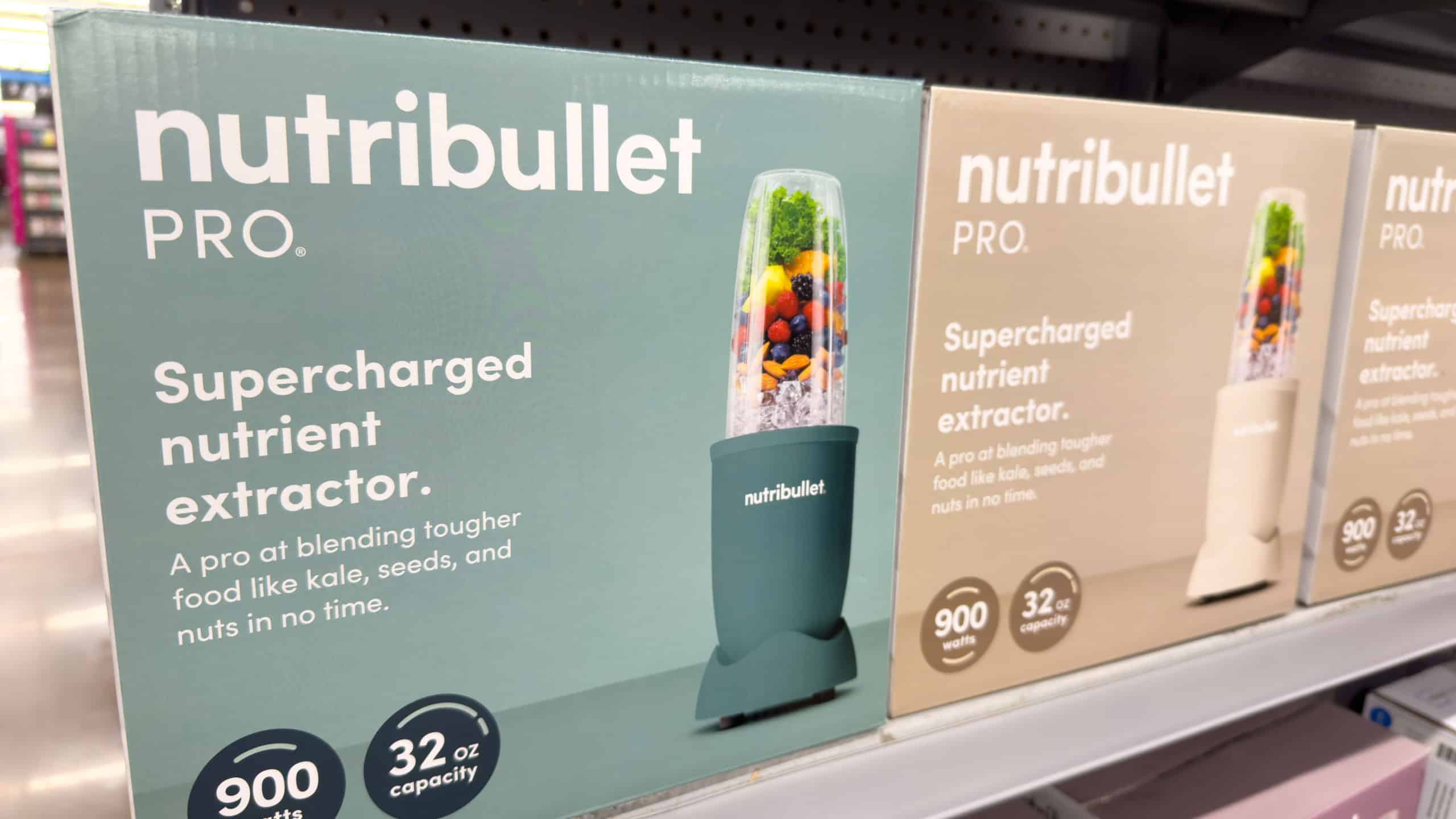
NutriBullet isn’t just facing lawsuits over exploding blenders. The litigation saga is also a gruesome reminder that blending your morning smoothie can lead to emergency surgery.
Since early 2026, the brand has been hit with close to 150 lawsuits claiming its motor runs so hot from friction that heat builds up inside a sealed plastic cup causing the “pressure cooker effect.” This leads to a violent rupture of the cup.
In 2022, while blending his protein shake, Joseph Sanchez’s New York kitchen transformed into a crime scene. The exploding blender cut an artery in his hand which Sanchez had to cauterize with a necktie.
NutriBullet agreed to pay $10 million in 2022 over a class-action lawsuit related to blenders that “thermally explode.” But they denied that Nutribullets are defective, instead attributing the problem to “user error” or blending for longer than one minute.
Hawaiian Tropic SPF lawsuit for misleading sun protection claims

Class action lawsuits against sunscreen manufacturers alleging false advertising have become fairly routine, but the Hawaiian Tropic class-action lawsuit filed in October 2025 hit many people hard.
Consumers allege that Edgewell Personal Care sold them sunscreen that didn’t provide the sun protection factor promised on the label.
Private lab tests commissioned by the plaintiffs in a lawsuit against Edgewell found that the Everyday Active SPF 50 Sport Sunscreen applied to human subjects actually provided only SPF 20 sun protection.
Worse, according to the lawsuit, consumers who rely on sunscreen for safety against sun damage spent more money on these products than others because of the promise of higher protection levels.
Sources: Please see here for a complete listing of all sources that were consulted in the preparation of this article.
Like our content? Be sure to follow us.

