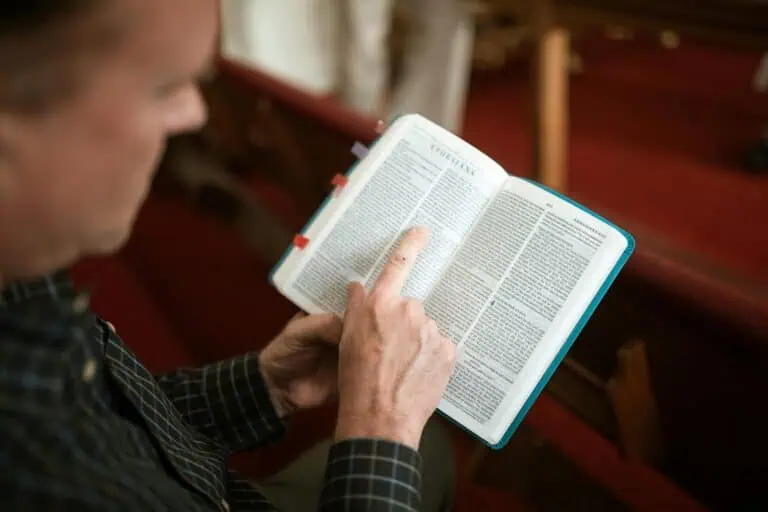

The Bible really can be confusing sometimes! Some verses involve ancient customs that seem out-of-touch, while others have metaphors that fly over our heads. Either way—they’re difficult to understand. Here are 12 of these puzzling passages and the lowdown on what they’re really about.
Featured Image Credit: Shutterstock.
Matthew 5:29 – The Eye Thing
This verse sounds more like something out of a horror movie—Jesus said if your right eye causes you to sin, just pluck it out. Extreme, right? But he wasn’t telling us to actually maim ourselves but rather to avoid sin like the plague. Even if it means giving up something we love! There’s no need for eye patches as long as you avoid bad choices.
1 Corinthians 14:34 – Women in the Church
Paul once said that women should stay silent in churches, which seems rather sexist. However, you can’t forget about context. Back in those days, the Corinthian church had serious issues with disorder during services and Paul was trying to keep things orderly & respectful. This phrase was likely to address specific disruptions instead of being a blanket rule.
Revelation 13:18 – The Number 666
There’s really no scarier set of numbers than 666—the Devil’s number! Yet the truth is that John was using a common code to discreetly call out the Roman Emperor Nero without getting into trouble. Instead of trying to warn people about Satan, most historians agree that it was simply a jab at a particularly nasty ruler.
Leviticus 19:28 – No Tattoos?
Leviticus 19:28 is an infamous verse that bans tattoos & compares them to pagan mourning practices. Essentially, it was trying to set the Israelites apart from neighboring tribes. But in modern times, most people don’t see a tattoo as a sign of pagan allegiance so the cultural context is more important than the ink.
Exodus 21:20-21 – Slavery Rules
To most people’s surprise, the Bible talks about rules for slavery and some people even argue that it’s condoning it. Actually, these were guidelines meant to make the harsher sides of this practice a little more manageable. You have to remember that slavery was everywhere back then. Rather than supporting it, the verse was meant to make such an inhumane practice a little more human.
Ephesians 6:5 – Slaves, Obey Your Masters
Similarly, Paul also tells slaves to obey their masters as they would Christ. That’s not exactly what we want to hear today! However, back then, the verse was teaching people how to keep the peace & survive a system they couldn’t change overnight. While it sounds strange, Paul was working within his world to create more peaceful relationships.
Judges 11:30-39 – Jephthah’s Promise
In one Bible verse, Jephthah promises God he’ll sacrifice the first thing he sees at home if he wins his battle & he thinks it’ll be an animal. Unfortunately, it’s his daughter who greets him. So what’s the meaning of this? It might sound strange but it’s simply a warning about making rash promises, especially those you might regret.
Genesis 22:2 – Sacrificing Isaac
Speaking of sacrifice, in one verse, God tells Abraham to sacrifice his son Isaac but stops him at the last minute. It’s easy to think that He was promoting child sacrifice—but that’s just not true. In fact, Abraham’s story is meant to test his faith and foreshadows ideas of sacrifice. That’s pretty important in the New Testament.
Mark 9:43-48 – Where the Worm Does Not Die
In Mark, Jesus talks about a place where the “worm does not die” and creates a grim picture of life after death for sinners. The truth is that he was referring to Gehenna, a real-life garbage dump that burned continually. Jesus used it here as a metaphor for the consequences of sinful behavior.
2 Kings 2:23-24 – Elisha and the Bears
Elisha is a prophet who is mocked by some youths and he curses them. Sadly, this leads to a brutal bear attack. The lesson of this harsh tale? No, it’s not in support of violence—instead, that God’s messengers should be respected. The verse is trying to show the power that comes from such a prophetic role.
Luke 14:26 – Hating Your Family?
After reading this verse from Jesus, you might think that it’s encouraging you to give your family the cold shoulder. But stop right there! He’s not promoting family feuds—rather, he’s using strong language to say that following Him might mean making tough & unpopular decisions. We should always prioritize our spiritual commitments, even when they’re not the easy choice.
Psalm 137:9 – Blessing a Baby Basher
Psalm 137:9 ends with, “Happy is the one who seizes your infants and dashes them against the rocks.” While it seems to endorse infanticide, the verse is meant to be an expression of deep sorrow & anger from the Israelites. They were captives under Babylonian rule, after all. By using such strong words, the Bible shows us the intense despair that the people felt.
Like our content? Be sure to follow us.