

Sometimes, you walk through a nice-looking neighborhood & realize nobody’s outside. There are no kids on bikes. No parents chatting by the mailbox, not even a stray dog. It’s weird. That’s because some American home designs are keeping people apart. Research found that isolating home and neighborhood design can cause psychological distress and lack of social connections (see sources at end). Here are eleven ways that American homes may isolate people. Which of these did you notice before?
Featured Image Credit: Shutterstock.com.
Separate entrances for every unit

Our home designs aren’t the best for socializing. Most are pretty spaced out. Even if the home is a row house or shares a wall, most of the time, the two homes don’t share anything, whether that’s a hallway or a stairwell. They don’t even share a doormat. It doesn’t matter how physically close the two neighbors are. A lack of shared space makes it feel like two tiny islands, miles away from each other.
No place to hang clothes outside

Clotheslines are non-existent in a lot of American neighborhoods. This is mostly due to HOA rules & the fact that the majority have dryers. However, we’ve lost a sense of community. We don’t talk over the fence while hanging socks & there’s no catching up while folding shirts in the sun. Just the hum of a dryer. How lonely.
Bedrooms spaced far apart

Older homes had bedrooms all lined up in a row. But these days, you have one upstairs & one in the back. There might be one down a long hallway. Such thick doors & carpet mean that everyone has their own soundproof room. You could live with someone and barely hear them sneeze.
No balconies in the suburbs

You’re probably not going to step out onto the balcony with your morning coffee. That is, unless you’re in an apartment or townhouse. Why? Because most suburban homes just don’t have one. You’re either inside or in the backyard behind a fence. You can’t really socialize with anyone this way.
Private bathrooms for everyone

It’s nice having a bathroom for each bedroom now. Even kids get their own. But it’s not so great when you realize that nobody bumps into each other as they’re brushing their teeth. You don’t have that conversation while you’re sharing the mirror. Everyone has their own sink. And with it, their own silence.
Wings that split up the family
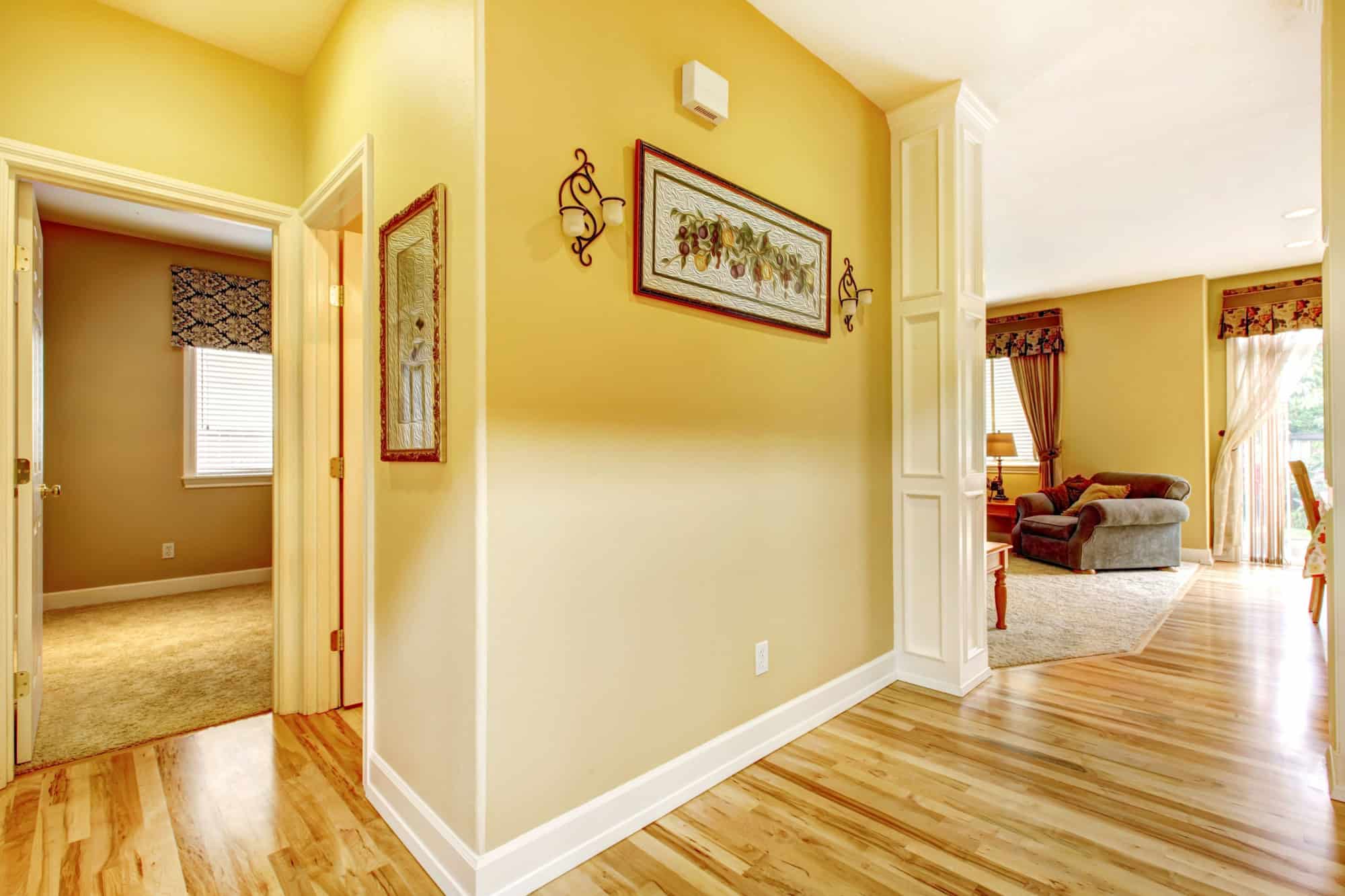
Many American homes are shaped like a “H.” There’s one side for parents & the other for kids. Sure, it gives people privacy, but also an excuse not to interact with each other. You could easily go from your room to the kitchen to the couch without passing a single person. Is it cozy? Or is it lonely?
Mudrooms cut off the entryway

You pull into the garage, step into the mudroom & then you’re instantly home. You don’t pass through the main entrance or walk through the house. That means you’re not crossing paths with anyone. Yes, it keeps the dirt out. But it also skips that moment where someone might say hello & ask about your day. How will anyone even notice you’re back?
Side or backyard patios instead of front porches

The chairs & a little table are on the side or back patio. Yet nobody can see you unless they’re standing in your backyard. Which they’re not. Side or back patios essentially cut you off from the sidewalk, and you’ll sit out there, hidden behind a fence. You miss everyone walking by. Even if you wanted to wave, they wouldn’t see you.
Dead-end cul-de-sacs

Dead-end cul-de-sacs definitely make a street quieter. But they also make them emptier. Nobody just “passes through” a cul-de-sac. You’ll only go there if you’re heading to a specific house, so there’s less walking & less biking. There’s less of everything except parked cars. You could live at the end of one street for years and never meet the person four houses over.
Massive front setbacks

The rules say the house has to sit way back. So it does. As such, your front door is way over there & the sidewalk’s way over here. People walk past. But it’s all distance. You’re unlikely to wave from the porch or make eye contact from the window. Everything’s set up to feel neat and spaced out. That space makes casual connections disappear.
Driveways replace shared parking areas

After you park, you walk inside. That’s it. There are no shared parking garages or lots. Really, you have no reason to walk past another front door. You just step out of your car & vanish into your own place. When would you have the chance to ask someone, “how’s it going?” Never.
Sources:
1. Wilson‑Doenges, G. (2001). Push and pull forces away from front porch use. Environment and Behavior, 33(1), 75–97.
2. Brown, S. C., Mason, C. A., Perrino, T., Lombard, J. L., Martinez, F., Plater‑Zyberk, E., Spokane, A. R., & Szapocznik, J. (2008). The relationship of built environment to perceived social support and psychological distress in Hispanic elders: The role of “eyes on the street.” Environmental Health Perspectives, 116(10), 1300–1310.
Like our content? Be sure to follow us.


