You’re standing in a dusty crowd. Before you is a man claiming that everything you’ve been told about how to be ‘good’ is actually upside-down. Sound familiar? That was life for Jesus’ followers.
Jesus didn’t leave us a guidebook for “how to have a perfect life.” He left us a mirror to reflect our hearts. Jesus’ teachings weren’t comfortable. In fact, they were convicting.
Even now, ages after, we find ourselves grappling with the very same challenges He presented. Here are ten instances where Jesus’ teachings pushed us to dig deep.
Why would Jesus tell people to “hate” their own family to follow Him?

To fully grasp what Jesus meant here, we need to understand how the Hebrew language works in terms of the idiom “preference.” Jesus was speaking hyperbolically for emphasis.
If God is our sun, then every other relationship (even if it’s the most picturesque on earth) ought to pale in comparison to a candle.
The uneasy thing about His analogy is the idea that no earthly relationship should be idolized. To be righteous in Jesus’ eyes, you must have an unattached heart.
Why did Jesus sometimes refuse to help people immediately?

Jesus met a Canaanite woman whose daughter had an evil spirit causing her great distress. She kept asking Jesus for help, but He didn’t answer her. He wanted to test how strong her faith was.
When Jesus told her something that implied she wasn’t going to get what she wanted, she didn’t turn away. Instead, she insisted that even the scraps from Jesus could cure her daughter. Moved by her perseverance and compassion for her daughter, Jesus instantly healed her daughter.
At other times, Jesus permitted the delay so that faith could develop. In The Healing of the Canaanite Woman, He said nothing and questioned her first. The woman continued to press Him nevertheless.
Because of her persistence, her faith was shown to be strong, and He healed her daughter. It was this lag that ultimately showed what He was trying to do.
Why did Jesus tell the rich young ruler to give away everything?

A rich young man asked Jesus how he could enter the kingdom of heaven. Jesus replied, “Sell all you have and give to the poor.” Slowly the young man walked away sadly. He was burdened down by his riches.
Jesus desired for him to realize that he loved his riches more than he loved God. Anything we love more than God, even good things, will enslave us.
It is a challenging question Jesus asks each of us: Is there anything we love more than God?
Why did Jesus say He came to bring a sword instead of peace?

Jesus warned about bringing a “sword” because He understood how hard life could be if we chose to follow Him. He knew that sometimes truth brings conflict and can divide families against each other.
Jesus wasn’t trying to hurt anyone; He was just speaking the truth. Family is great, but God must come first even if others’ opinions speak against yours.
Why did Jesus speak in parables that many people could not understand?

In the Galilee villages, most people worked hard at simple jobs. Some were fishermen. Some folks farmed the land, while others made bread at home.
Jesus frequently used these common things as He taught.
He talked about seeds landing in the dirt, fisherman’s nets filled with fish, and yeast causing bread to rise. Jesus used familiar objects to describe greater truths about God.
To those who were insiders, sitting by His fireside at night, the parables were a doorway. To the outsiders who listened, looking only for fault, the stories became a brick wall.
Why did Jesus say some prayers will not be answered if forgiveness is missing?

Consider this little analogy Jesus uses about “spiritual plumbing.”
You could be standing there, praying and asking God for peace, healing, whatever. But if you’re holding onto anger toward an ex-boyfriend, ex-girlfriend, coworker, or whoever, you may as well not talk to Him at all.
He hears you fine, but the anger and resentment are a clog in the pipe.
If you’re unwilling to forgive someone, don’t expect God to forgive you and offer a new beginning. This verse causes us to ask ourselves, “Is my pride worth more than my peace?”
Why did Jesus allow the destruction of the fig tree over a lack of fruit?
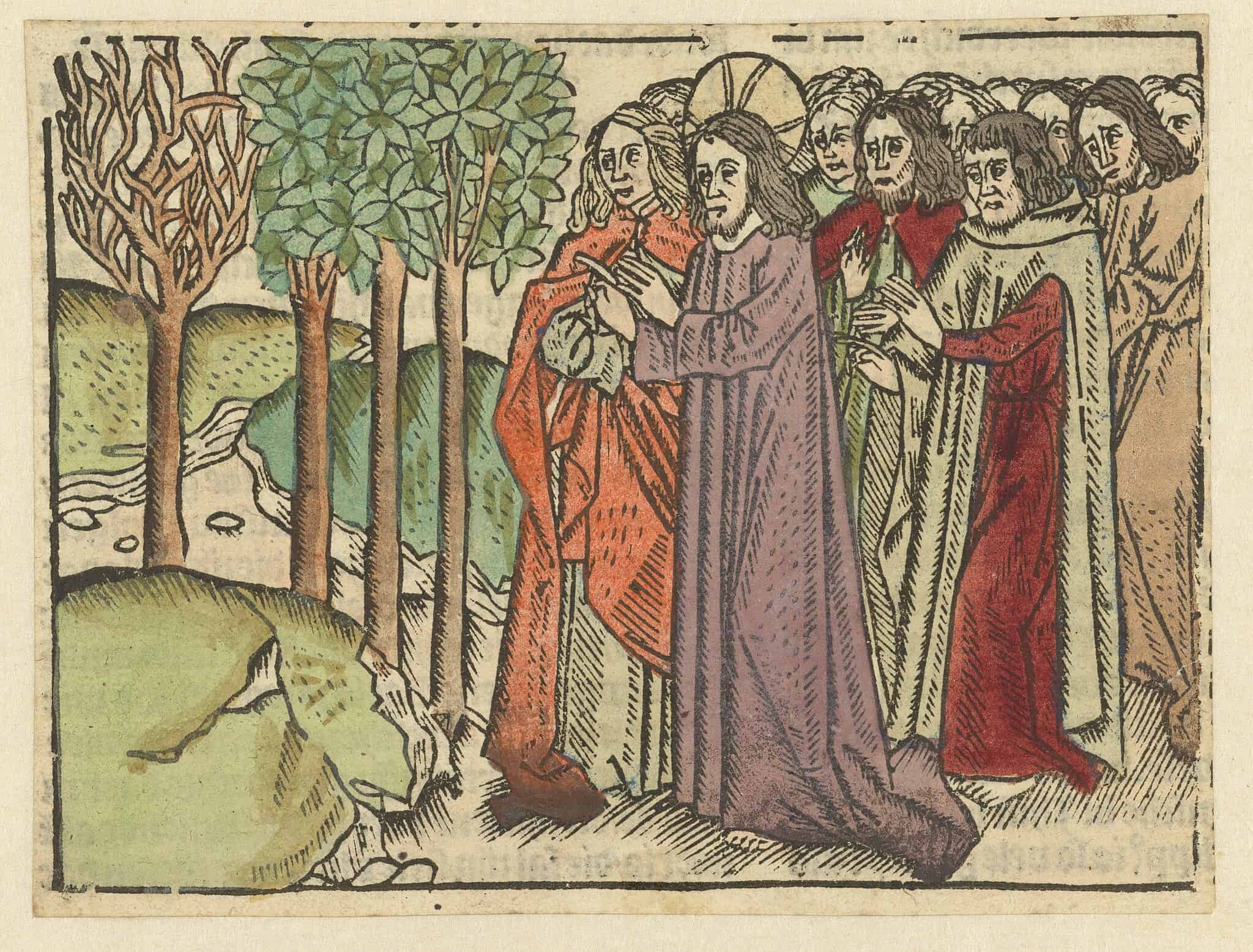
As they walked, Jesus and his followers went past a fig tree. This fig tree was full of leaves and looked healthy. When Jesus went near it, however, it had no fruit. There was only bark and leaves.
Jesus cursed it because it wasn’t fruit-bearing like it should have been. Jesus wasn’t mad at this fig tree; He was simply teaching through it.
Sometimes people act like that fig tree. They look good on the outside but have nothing worthwhile on the inside. Let’s make sure our actions reflect true worth. Let’s not fool ourselves into thinking we’re living righteously when we’re not.
Why did Jesus tell people to turn the other cheek after being struck?

Picture a laborer slapped in the face by a Roman soldier. The soldier assumes he’ll cower in fear. But the man slowly turns his head and presents the other cheek. The soldier hesitates.
Another slap would make him look ridiculous; a punch, however, would force the soldier to see the worker as an equal. For that split second, the victim is in control.
Breaking the pattern of violence throws the aggressor into a moral and psychological quandary. It makes him recognize the humanity of the person he was attempting to victimize.
Jesus isn’t teaching that we fight violence with violence and somehow win. What Jesus is getting at is that we’re not aiming to conquer, but to reveal wrongdoings.
Why did Jesus warn that many religious people would still be rejected?

Jesus is calling out spiritual busywork. You can preach thunderous sermons, build massive charities, or perform incredible miracles, but if your heart is arrogant or calloused, it is worthless.
Jesus is saying you could seem like a superstar Christian, but inside, be totally empty.
Instead of asking “What have you done for God?”, consider “Does God know the real you?
Why did Jesus say following Him requires carrying a cross?

Jesus was trying to ‘thin the herd.’ He understood that people were coming after the free lunch and the miracles, so He dropped the Cross-bomb to see who was willing to stay.
He’s telling us that if you are not willing to have your ego crucified, then you are not following Him; you are just a fan of Him.
Faith isn’t some accessory you plug into your life, it’s a violent overthrow that costs you everything.
Sources: Please see here for a complete listing of all sources that were consulted in the preparation of this article.
9 radical teachings of Jesus that go against popular beliefs

Forget the safe, polished versions of Jesus we usually hear about. When you strip away the stained-glass filters, his actual words were often disruptive and deeply uncomfortable. He didn’t come to pat us on the back; he came to dismantle our ideas of success, safety, and even family. Here are nine radical teachings that still deliver a shocking punch two thousand years later.
9 radical teachings of Jesus that go against popular beliefs