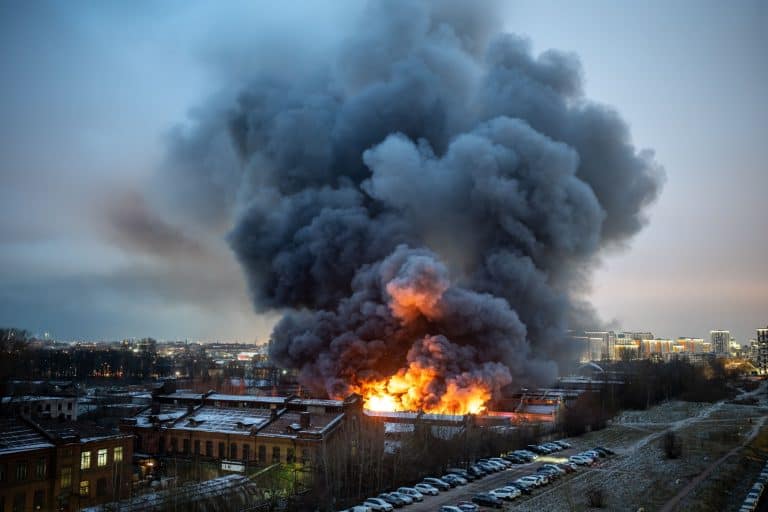

Countries rise and fall on the back of disasters and America is no different. Some of the disasters Americans faced have become household names but many more have been forgotten.
But these silenced tragedies led to lawmakers and industries questioning the way they operate. And their impact was so powerful that our communities had to struggle for years to pick up the pieces and move on. Here are ten disasters you’ve probably never heard of, which changed America.
Featured Image Credit: Shutterstock.
The Great Molasses Flood (Boston, 1919)

Boston’s North End residents had no warning of the disaster. A large storage tank ruptured, unleashing a tidal wave of molasses. The destructive wall smashed through narrow alleyways, crushing homes and stables. Wagons were lifted and hurled.
People were trapped before they could take flight. Rescue workers waded through thick syrup looking for victims. The disaster killed twenty-one people which resulted in multiple years of contentious courtroom battles.
The Peshtigo Fire (Wisconsin, 1871)
The same night that the Chicago Fire captured the country’s attention, a far deadlier conflagration devastated Peshtigo, Wisconsin. More than a million acres burned in firestorms that engulfed the town and outlying villages.
Winds and fiery debris produced fire whirls that could melt metal and wipe out entire communities. The disaster claimed anywhere from 1,200 to 2,500 lives but remained overshadowed by Chicago’s news coverage.
Black Tom Explosion (Jersey City, 1916)

Imagine a peaceful night interrupted by a thunderous explosion. That was Black Tom Island in 1916, when munitions stored there were blown up. Buildings across Manhattan shook and fires raged on the Hudson River. The blast was felt miles away, and was the biggest wartime sabotage on American soil at the time. The attack also exposed how unprepared cities were for war, and led to decades of lawsuits over liability.
Bath School Massacre (Bath Township, Michigan, 1927)
The day started like most others in Bath Township, Michigan. But Andrew Kehoe’s secret cache of bombs in the school buildings turned it into one of the deadliest disasters in U.S. history. Forty-five people were killed, most of them children. Bombs he set later at his farm prolonged the bloodshed. The event received national and even international headlines after it occurred but has since been largely forgotten, its memory surviving only in the words of local residents.
Texas City Disaster (Texas City, 1947)
In 1947, the ammonium-nitrate-loaded SS Grandcamp caught fire in the port of Texas City. Its explosion and a series of chain reactions leveled most of the city, killed about 500–600 people, and burned for days. The event, largely ignored outside industrial-safety circles, prompted sweeping reforms in the handling of chemical cargos.
Monongah Mine Explosion (West Virginia, 1907)

In West Virginia, families awoke to the news that the Monongah mines had exploded, killing over 350 workers. Many of those who died were immigrants whose stories remain untold. The explosion exposed the unsafe working conditions in coal mines and helped lead to federal mine safety regulation. For local communities, the explosion is a tragedy they’ll never forget.
Donora “Death Fog” (Donora, Pennsylvania, 1948)

Residents of Donora, Pennsylvania, spent 1948’s last days in fear and sickness. A noxious fog crept over the town. Donora’s steel and zinc works’ emissions were blanketed by weather patterns. Residents gasped for air. Twenty died and thousands fell ill. The smog warned of the industrial emissions. It also birthed clean-air science.
St. Francis Dam collapse (California, 1928)
On the night of March 12, 1928, just before midnight, the St. Francis Dam failed. A torrent of water thundered down the canyon, destroying towns and killing hundreds of people. The catastrophe cut short William Mulholland’s civil career and altered the practice of dam engineering in the United States. The St. Francis Dam collapse remains an obscure event even though it was a major disaster.
Rapid City / Black Hills Flood (South Dakota, 1972)

On June 9–10, 1972, severe thunderstorms over eastern Black Hills caused flash floods in Rapid City, South Dakota. Torrential waters demolished neighborhoods, washed out roads and bridges, and killed approximately 238 people. This city never looked the same. The tragedy changed the way flood risks are managed. But to this day, many outside South Dakota have never heard of it.
Santa Barbara Oil Spill (California, 1969)
In January and February 1969, a blowout at Union Oil’s Platform A, and ongoing leaks on the sea floor released tens of thousands of barrels of crude oil into the Santa Barbara Channel. Oil fouled beaches, and marine life was killed in large numbers. The environmental disaster led to widespread public anger which created a newfound awareness among Americans about environmental issues.
Sources: Please see here for a complete listing of all sources that were consulted in the preparation of this article.
Like our content? Be sure to follow us.

