

Jesus never lived by the rules of the systems around him. He entered them and often overturned them. Some overturning was dramatic. A lot of it was quietly annoying to those who thought they had life all together.
He blurred lines that polite society kept clearly divided. He made the untouchables touchable. He spoke to absolutely the wrong people at the worst times.
His actions were not mere rebellions done just to defy authority. Every moment revealed deep truths about God’s intentions while showcasing our failed efforts to confine him inside human-made regulations.
He let a sinful woman touch Him in public (Luke 7:36–50)
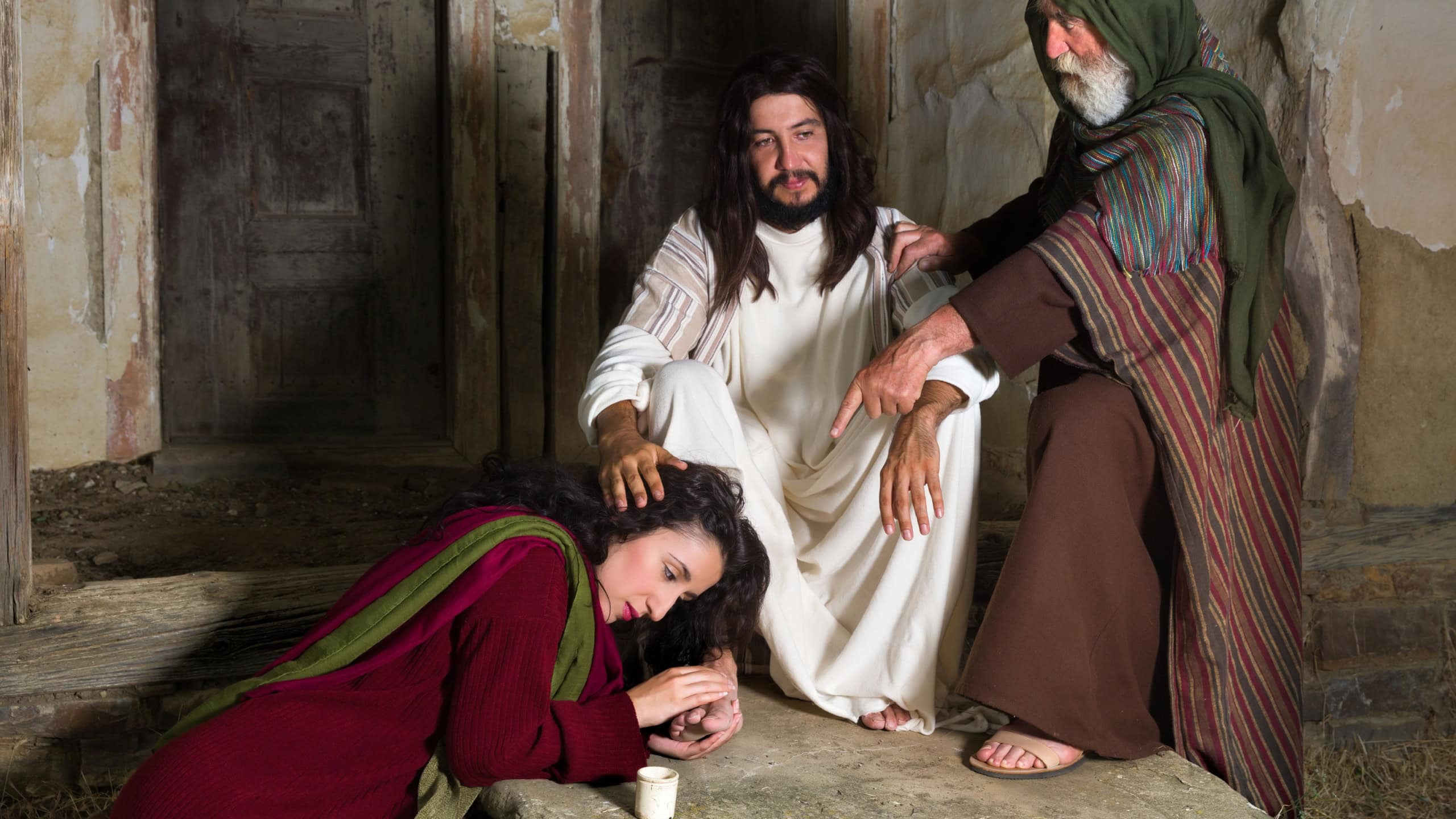
Jesus is enjoying a dinner party when suddenly a woman with a bad reputation runs in and starts crying at Jesus’ feet (Luke 7:36–50).
Let’s be honest, if we were at that dinner party we probably would have ducked out immediately. Why? Because reputations mattered back then like they do now.
Jesus didn’t move. His appreciation for authentic emotions outweighed his respect for traditional decorum. God disregards all the hypothetical judgments neighbors are making about you. He stood by someone society wanted to cancel long ago.
He asked a Samaritan woman for a drink (John 4:7–26)

Jews rarely traveled through Samaritan territory and certainly would not stop to converse with Samaritans. Yet Jesus stops at a well and asks a Samaritan woman for a drink of water (John 4:7–26).
He not only crossed racial boundaries. He crossed gender lines when He initiated an intimate spiritual conversation with a woman who was not his disciple or family member.
He touched a man with leprosy (Mark 1:40–42)

In that time period, if you had leprosy, you were considered a living ghost. You were exiled outside of town and had to shout “Unclean!” if someone came near you. People feared not only the disease itself, but the spiritual stain they’d get from being around you.
Yet when this leper kneels down and pleads for mercy, Jesus does the unthinkable: he touches him (Mark 1:40–42). Jesus could’ve spoken the word and healed him from a distance, but he touched him first.
By touching this man, Jesus upended everything we knew to be true. Typically, unclean things tainted everything around it. But when Jesus made contact with this man, his life and health were so potent that the disease had nowhere left to spread. Physical touch matters. It trumps fear.
He praised a Roman Centurion’s faith (Matthew 8:5–13)

Back then, Roman soldiers were considered enemies living among us. They were representatives of the oppressive government that taxed and abused Jewish society. Few even granted them eye contact.
But a Roman officer (Centurion) comes to Jesus, asking him for help. Jesus heals him. He holds him up as the golden standard for everyone else to follow (Matthew 8: 5–13).
Jesus told his followers that he’d never encountered such faith from anyone in his homeland before.
He redefined family loyalty (Mark 3:31–35)

Living in a society where your last name was your everything, Jesus’ words were quite offensive. His mother and brothers were standing at the door wanting to speak with him, but he didn’t pause his teaching to embrace them.
He looked up at the crowd and asked, “Who are my mother and my brothers?” Then he pointed to the people gathered around and declared they were his mother and brothers.
Jesus wasn’t disrespectful to his mother. He was dismantling the concept of an inner circle. He was shattering the norm that blood relation is the most important. He elevated a spiritual kinship higher than physiology. Loyalty to what is right took priority over loyalty to family.
He defended His disciples for picking grain on the Sabbath (Mark 2:23–28)

Religious leaders focused on the minutiae of the law. Seeing Jesus’ disciples plucking heads of grain to eat because they were hungry, they yelled “Work!” because it happened to be a Saturday (the Sabbath).
Jesus responded calmly. He reminded them of how King David disobeyed the law to feed his hungry soldiers. Then he hit them with this one: “The Sabbath was made for man, not man for the Sabbath.”
Rules should serve humanity, not ensnare it. That is a direct hit on any bureaucracy more concerned with the handbook than the human being before them.
He allowed a woman to sit as a disciple (Luke 10:38–42)

In the ancient world, women worked in the kitchen. Men worked in the classroom. By taking her place at Jesus’ feet, Mary physically represented herself as a dedicated student: a disciple.
Martha was freaked out by the social stigma of a bad hostess and expected Jesus to intervene and send Mary back to work. But Jesus stood up for her. Jesus affirmed to Martha that Mary chose the superior way.
He wasn’t demeaning housework. He was affirming that a woman’s mind and spirit are just as valuable as her labor. He let her sit at the table they were telling her to stay away from.
He spoke against easy divorce (Matthew 19:3–9)

It’s common today to view rigid rules as oppressive. However, in Jesus’ day, easy divorce was oppressive to women. If a woman burned her husband’s dinner, she could be divorced and left homeless and disgraced.
The religious elite questioned Jesus about this abuse of power. He refused to support their popular “any reason divorce” mentality. Jesus tightened the rule back to its intended purpose.
Marriage was meant to be sacred and permanent from the start. By making divorce more difficult, Jesus protected women from careless abuse.
He entered Jerusalem on a donkey (Matthew 21:1–11)

During that time period kings would traditionally enter towns mounted on massive war horses. They rode war horses to intimidate their opponents.
Jesus did just the opposite. He rode into town on a donkey. Donkeys aren’t used for war. They’re used for peace. The crowds were expecting someone who would liberate them politically.
They wanted someone to go to war and throw the Romans out. Jesus entered on a donkey as a visual protest against trying to appear tough to become powerful.
He forgave the man lowered through the roof before healing him (Mark 2:1–12)

Imagine a group of friends tearing a hole in someone’s roof just to get their paralyzed buddy in front of a healer.
Everyone was expecting that paralyzed man to suddenly jump up and walk. Instead Jesus looked at him and said, “Your sins are forgiven.”
That made the religious leaders mad as fire. According to them, only God could forgive sins. You had to go to the Temple and offer a sacrifice to get your sins forgiven.
By forgiving this man while sitting in someone’s living room, Jesus was stealing business from the Temple. He was making it clear that what’s on the inside of a person matters (if not more) than what we can physically see on the outside.
Sources: Please see here for a complete listing of all sources that were consulted in the preparation of this article.
Like our content? Be sure to follow us.

