
As we age, there are small shifts in life we may not realize right away. It’s not about diminishing skills, but about experiencing life at a slightly different rhythm. The pace of certain activities subtly changes. Tasks we once rushed may now have a more measured approach. Here are 10 examples of life’s little shifts in tempo.
Featured Image Credit: Shutterstock.
Counting money or coins

Peak grip strength is in the early 20’s and it decreases gradually with age. Dexterity isn’t lost overnight, but becomes less acute so picking up or manipulating small objects, like coins or bills, may take longer. In research involving cognition, older adults were shown to double check more often as well, not necessarily out of confusion, but out of caution and thoroughness.
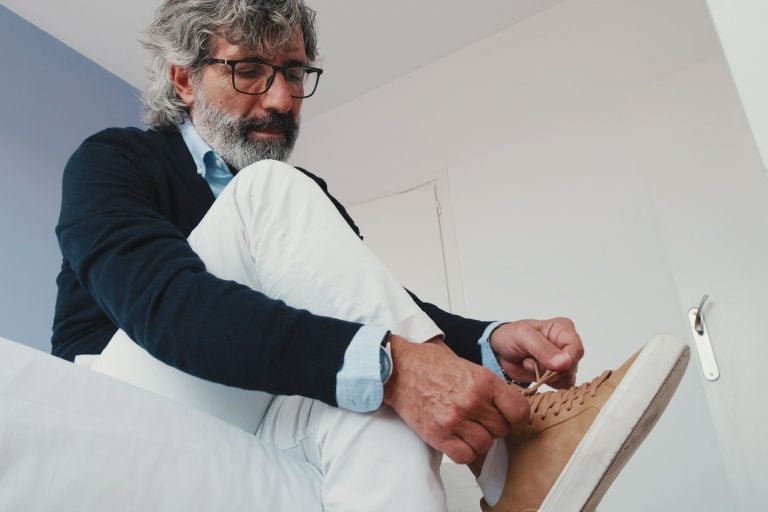
Putting on socks and shoes

This is so true as well. Mobility and range of joint motion diminish over time, particularly at the hips, knees, and lower back. Occupational health studies detail how this adds time to or requires more steps for simple everyday tasks such as bending to get dressed (sitting, bending, balancing).
Locking doors or handling keys

Manual Activities of Daily Living (ADLs) are activities which require fine motor skills, such as opening and closing jars and using tools like keys and utensils. Failing to complete small hand tasks, such as handling medications, turning keys, or fastening buttons, can be an age-related disability. It has been found that hand strength and dexterity decrease with age and testing hand dexterity may be a useful indicator for early age-related functional declines and cognitive changes.
Standing up after gardening or kneeling (Sarcopenia and recovery time)

Older adults may find that it takes a little longer for them to complete tasks that require squatting or kneeling, such as weeding, planting or harvesting in the garden. Age-related loss of muscle strength, known as sarcopenia, can make it more challenging to rise from a lowered position. Exercise studies have found that movements such as squats can increase muscle strength and ease the process of rising from a squatting position.
Reading instructions or menus

You find you take a split-second longer to read instructions. You turn your head this way and that, hold a page to the light or read a line or two over. It’s not that it’s hard to read, it’s just that there’s a tiny shift in the focus of your eye. Ophthalmologists report that as we age the natural stiffness of the lens slows activities that are focused close-up.
Finding words in conversation

“Tip-of-the-tongue” states are real, and do increase with age. When an older adult experiences this, he/she often knows the word and will usually be able to come up with it eventually. Research in linguistics and cognitive aging has found that lexical retrieval (the cognitive process of “getting words out”) is slightly slower with aging, even for healthy adults. This is normal and may not be a sign of memory loss.
Turning pages or scrolling

The eyes and brain process information more slowly with age, and most people take their time reading, or skim more than they used to. Studies of eye movement and tests of reading speed have found a gradual decline in processing speed in both print and on-screen reading even among those with 20/20 vision.
Getting comfortable in bed

Sleep doesn’t come immediately with advancing years. Elderly persons often fiddle with their body, pillows, or blankets for a few minutes before finally falling asleep. Studies have shown that sleep latency (the time taken to fall asleep) increases progressively with age.
Answering phone calls

Reaction time to an unexpected stimulus, like a ringing phone, for example, lengthens gradually over the course of the life span. Neurological research has repeatedly confirmed that both simple motor reactions and cognitive speed of processing slow down minimally with advancing years. Older adults may require a moment to find their glasses, orient themselves, or respond, and this is perfectly normal.
Getting out of a car

Getting out of the driver’s seat used to be no big deal. With time, it becomes a little ritual: first steadying up, then slowly swinging the legs out, then standing. The body doesn’t spring up after sitting a while the way it once did. Research on aging explains that’s typical, and it’s tied to joints and muscles slowing down naturally.
Sources: Please see here for a complete listing of all sources that were consulted in the preparation of this article.
Like our content? Be sure to follow us.